japan | kamagasaki | nishinari
KAMAGASAKI
If you get the subway at Shinsaibashi, in few stops you reach Dōbutsuen-mae station. When you get out, Osaka’s landscape has completely changed.
No more trendy young people doing “bura-bura” (hanging out), Shinsaibashi’s and Dōtonbori’s big billboards are gone, department stores turned suddenly into small old fashioned shops.
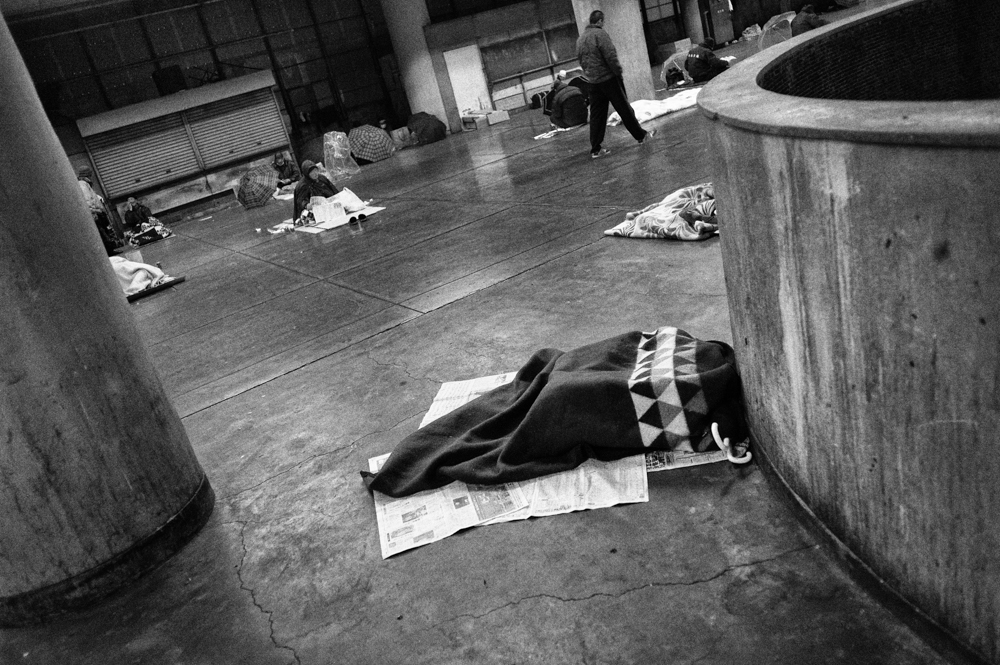
Walk a few hundreds meter south and you are in an unexpected Japan. This is Kamagasaki, part of Nishinari district, area where jobless, homeless and those who got out of the highly demanding japanese society, have found a place to live. Many are sleeping on the street, using carton boxes as a shelter, others, for a few money, find accommodation in humble dormitories.
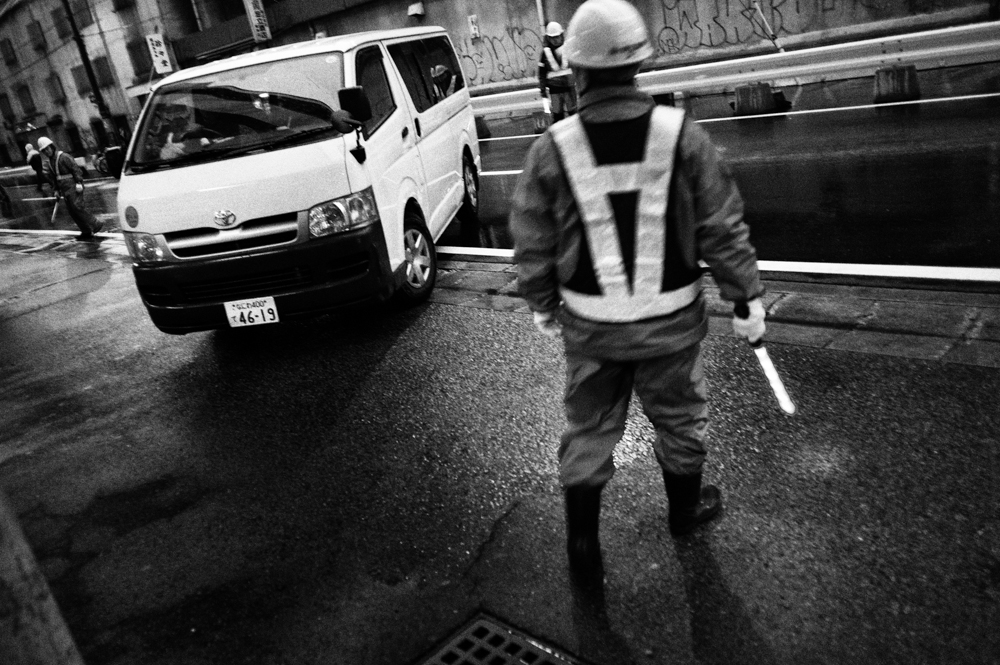
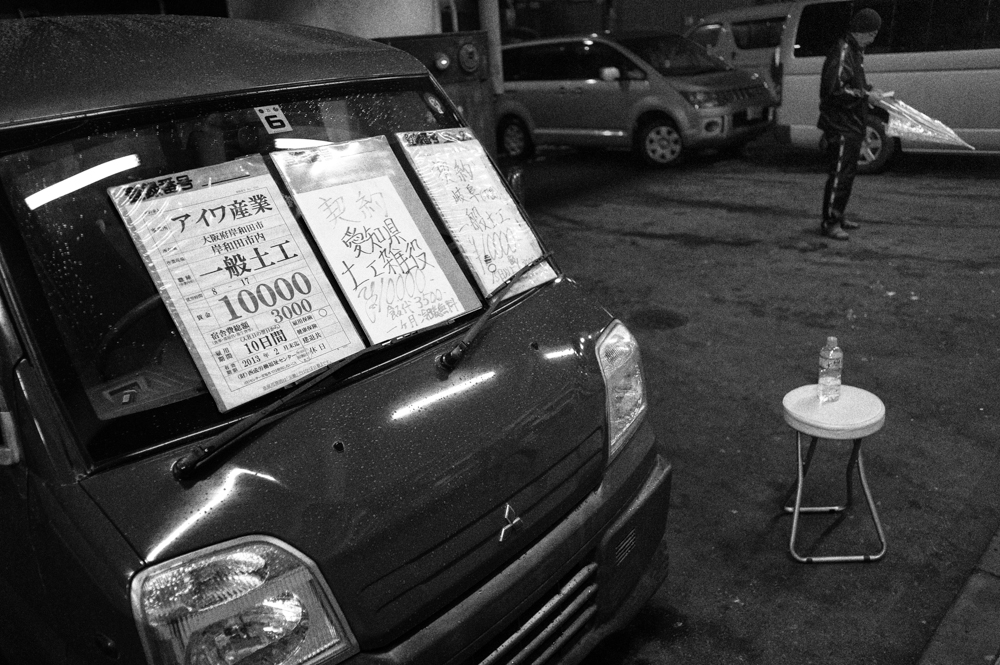
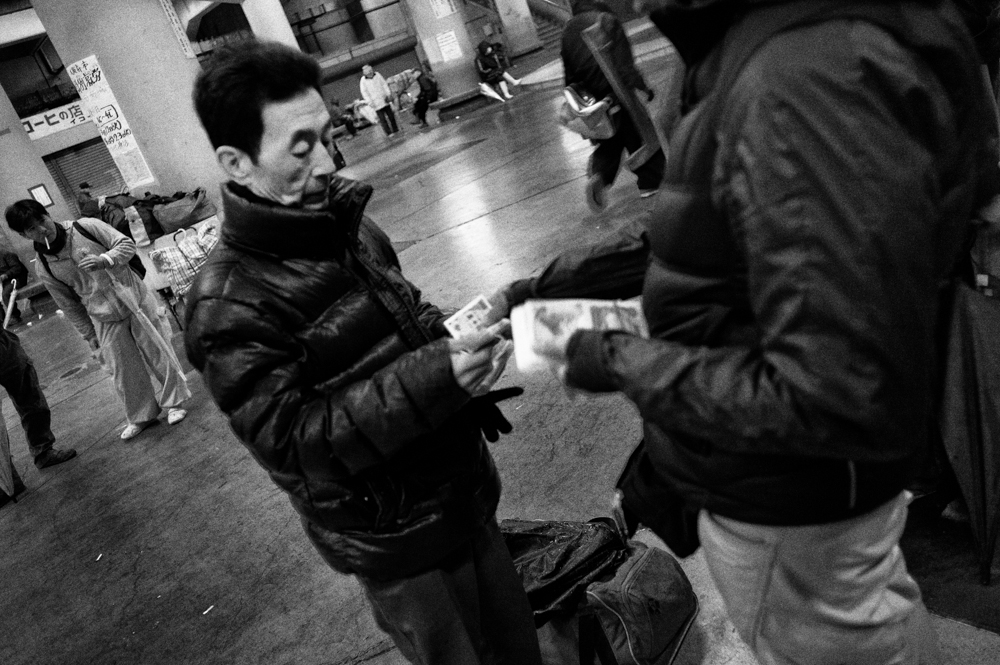
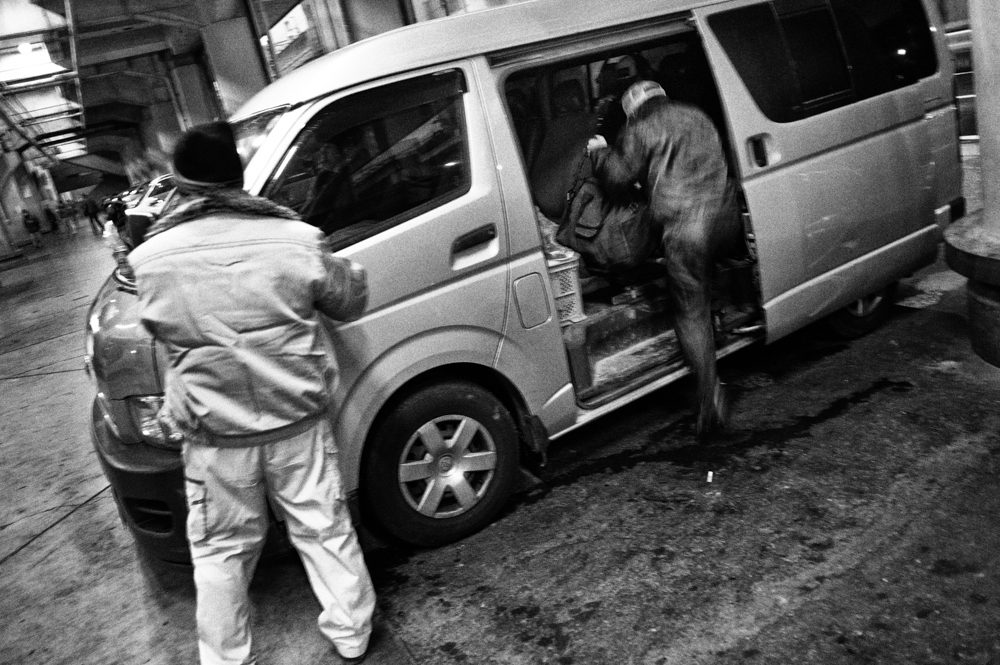
Early in the morning, they gather downstairs the Social Welfare Office; here small vans of construction companies come to pick up workers. Lucky ones, in general the young ones, are hired for a one day job.
The process is surprisingly well organized: traffic of vans is regulated by people in uniform, small boards show the wages for the workers. Selected people receive the money in advance and get into the van that takes them to the site.
Later, upstairs in the Social Welfare Office, other people queue up waiting to receive unemployment allowance.
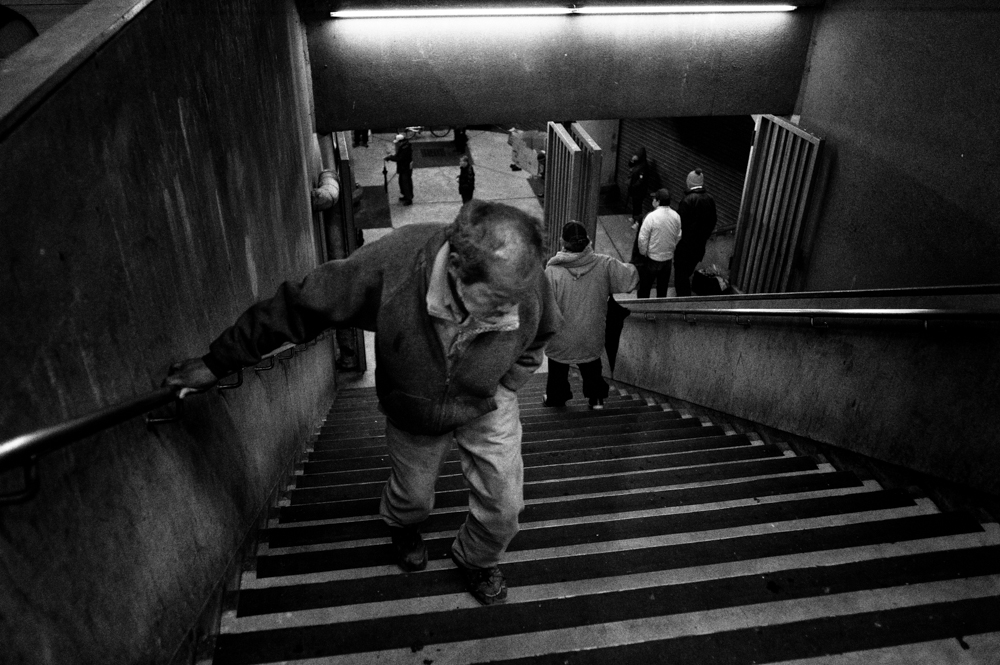
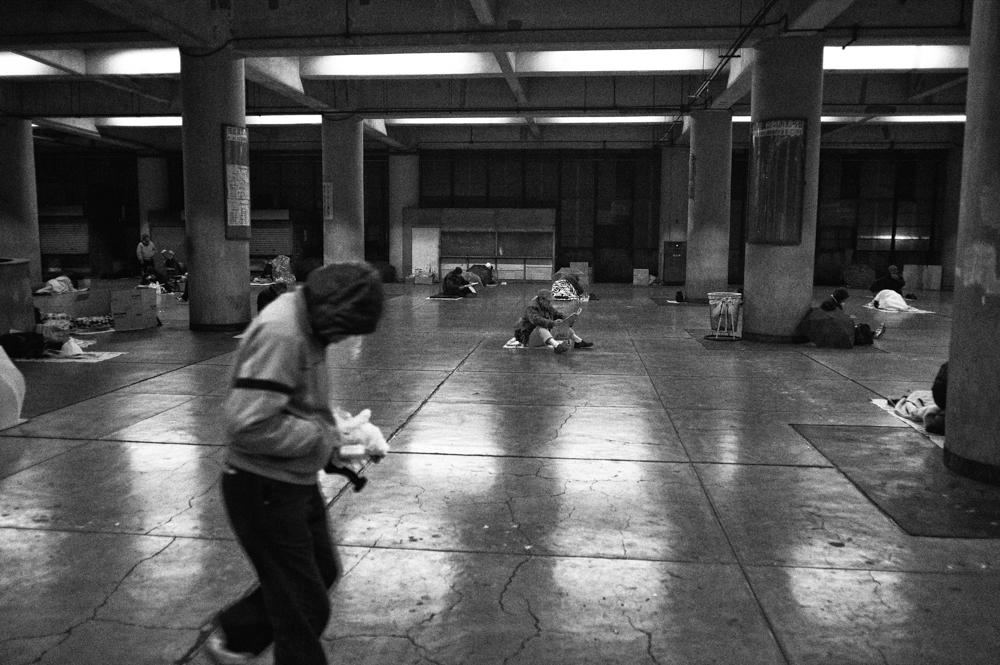
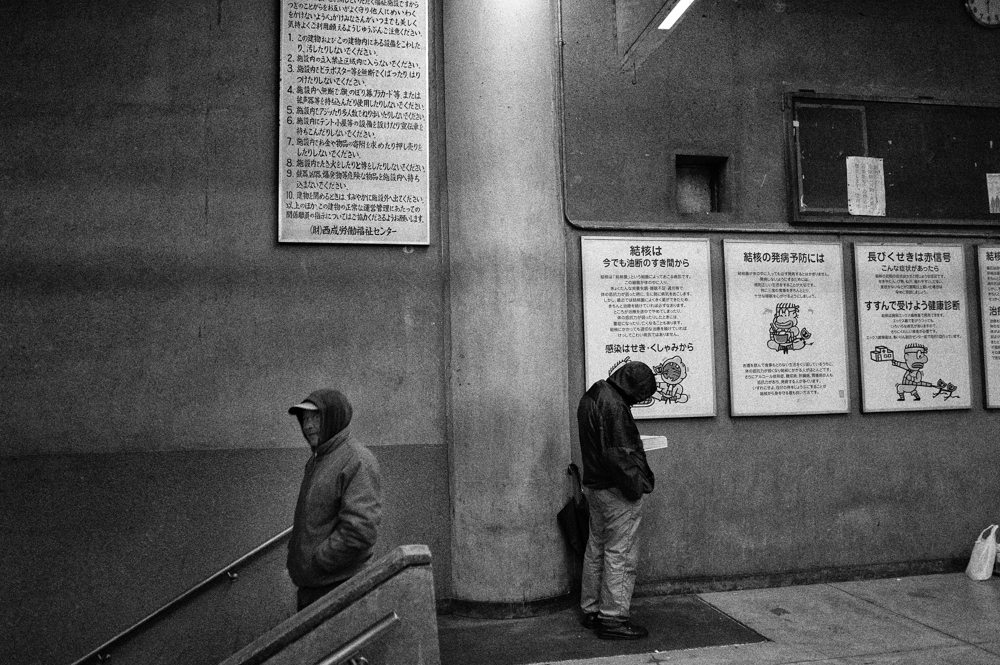
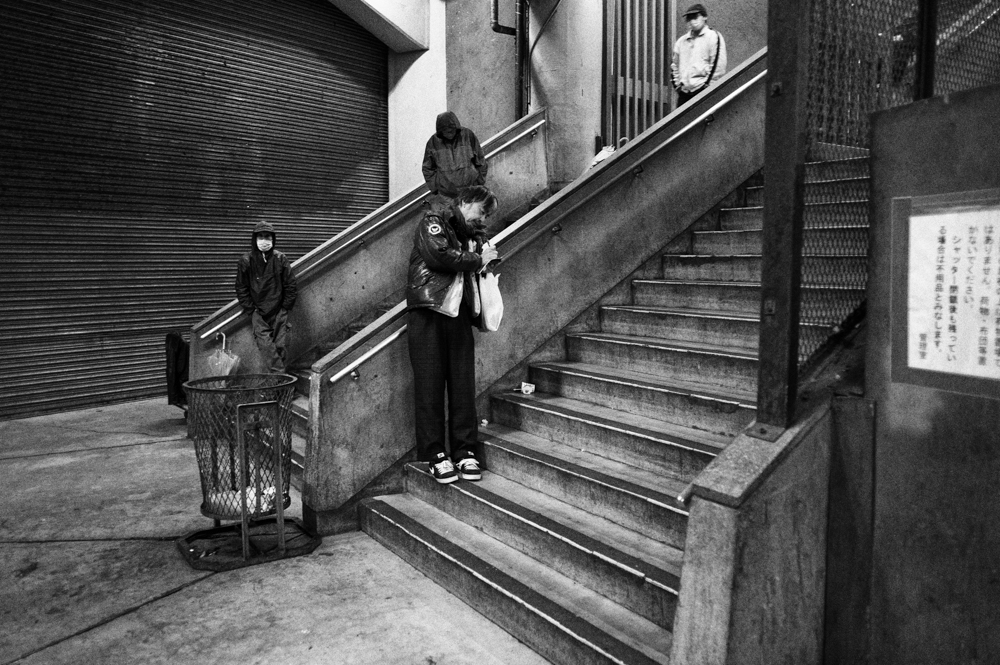
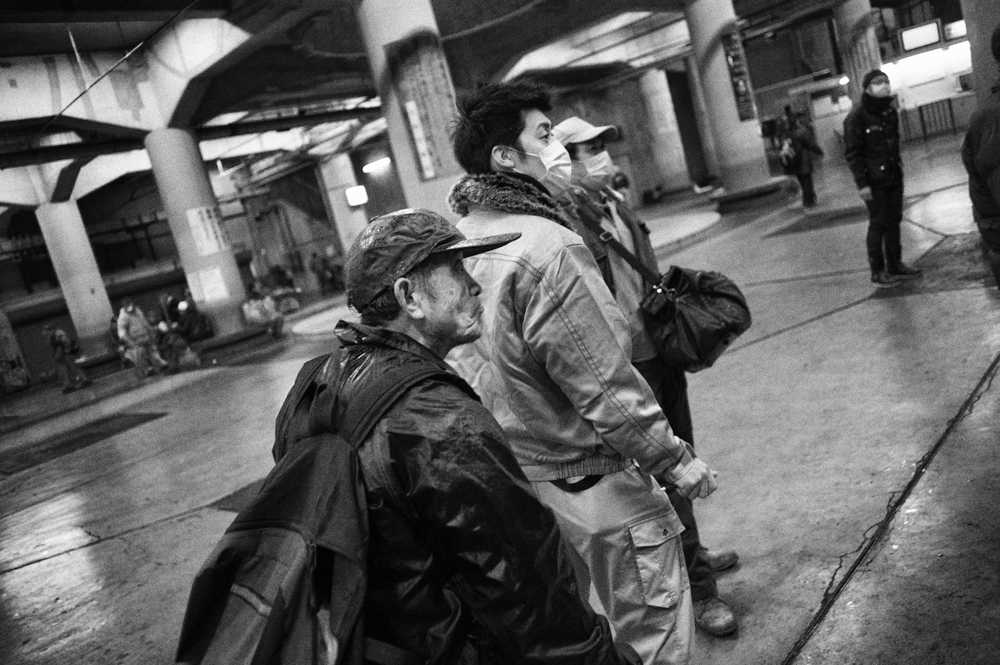
If you mention Kamagasaki to Japanese people, the most frequent comment they make is “abunai!” (dangerous). Actually, it is not that dangerous. In day time, many are the chances to meet interesting people; it is very easy to end up drinking beer or cheap sake with those who are hanging out. Someone is also eager to tell about his life and how he ended to live in such a place. Not just workers who lost their job end up here, someone deliberately choose to come here. Whatever went wrong, business or relationship, for some Japanese it is too much to bear as it is considered deeply humiliating. Therefore moving here, far from society’s judgment, is a viable option.
Someone who is passing by, can sing for you, someone even improvises a dance.
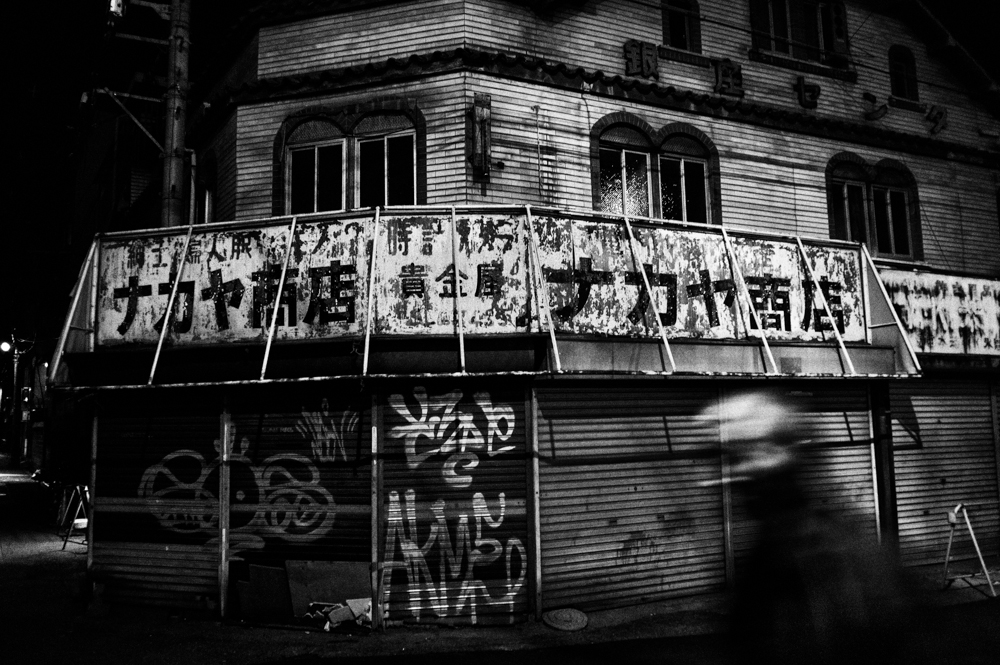
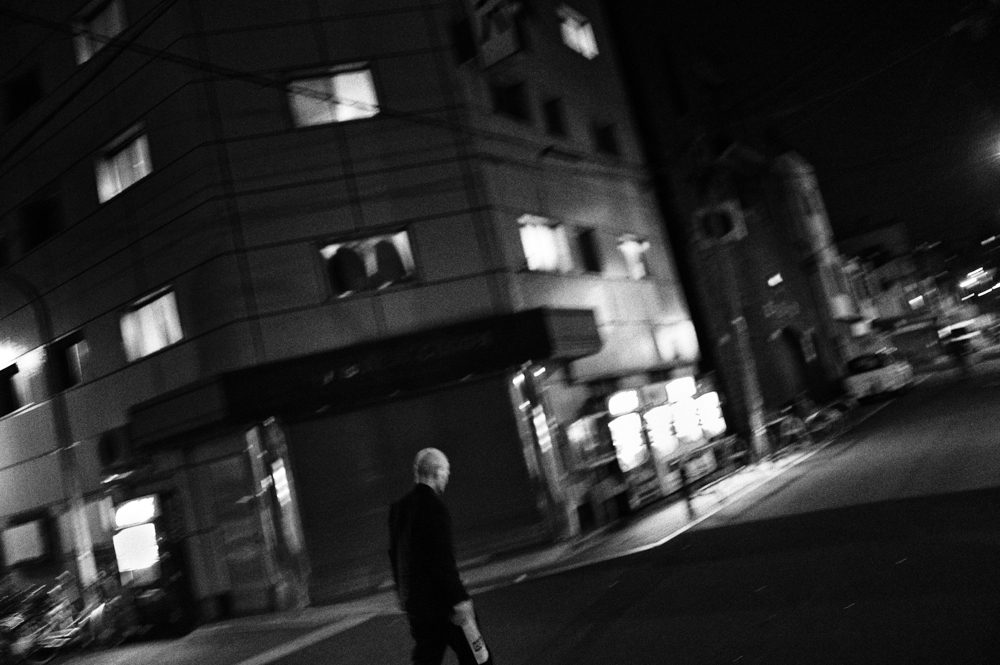
Shops shut down early, just after the sun goes down. Only few “izakaya” (cheap restaurants) remain open.
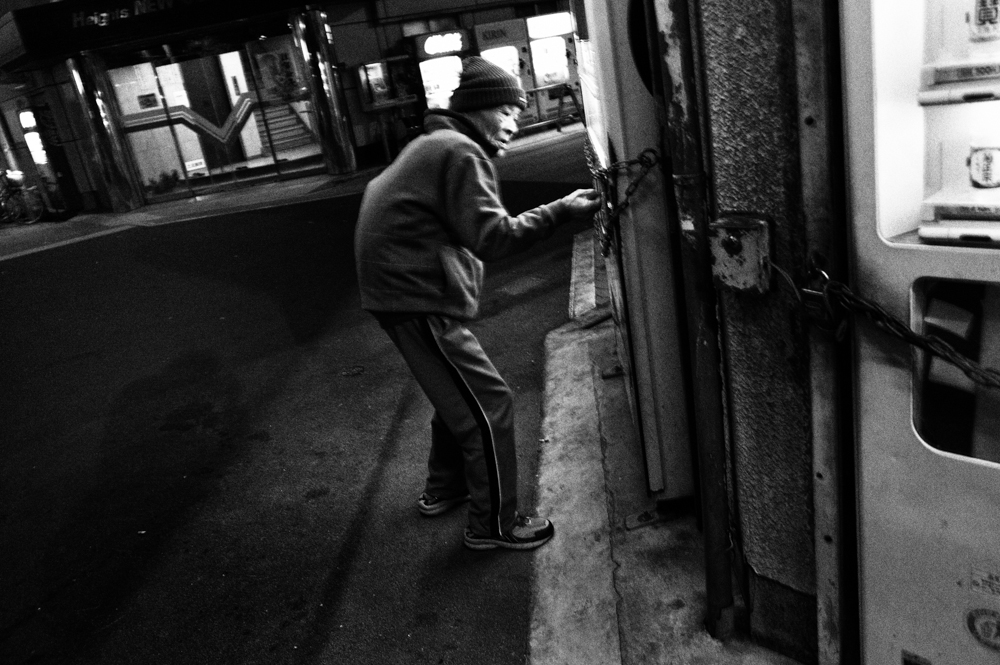
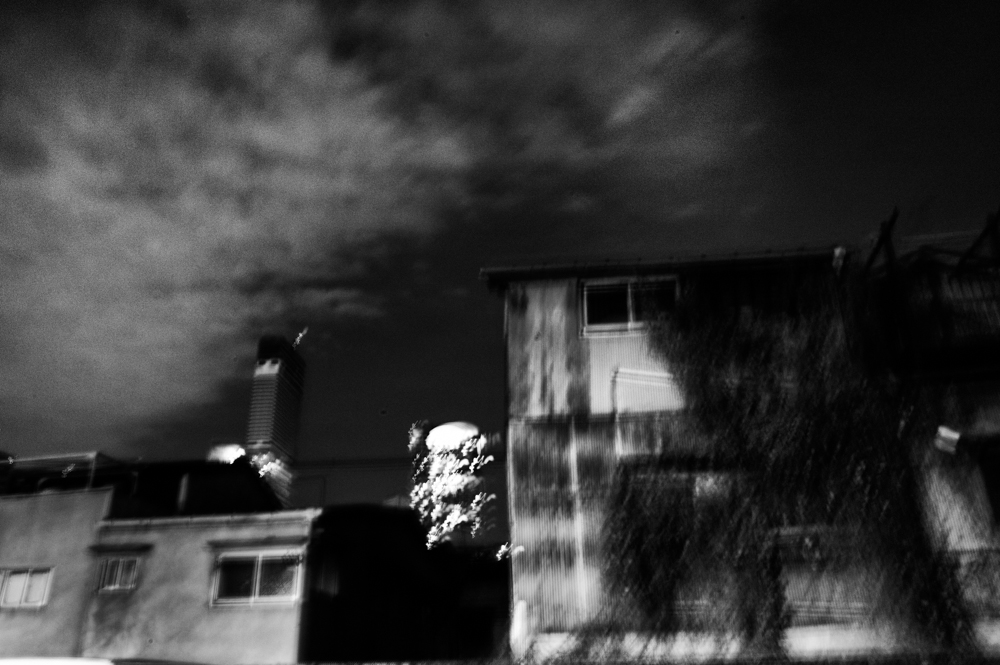
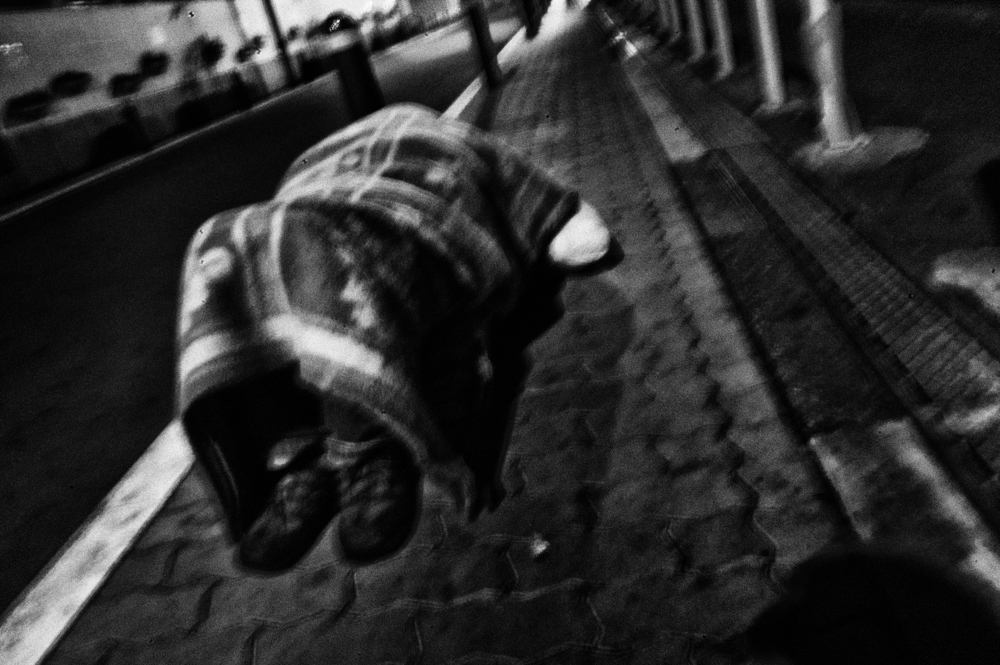
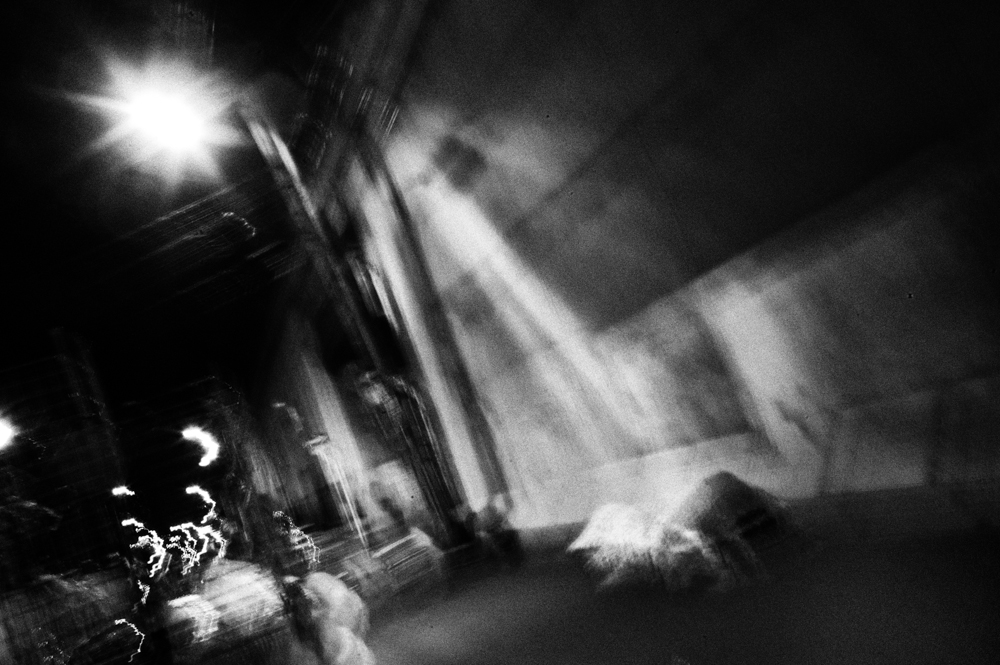
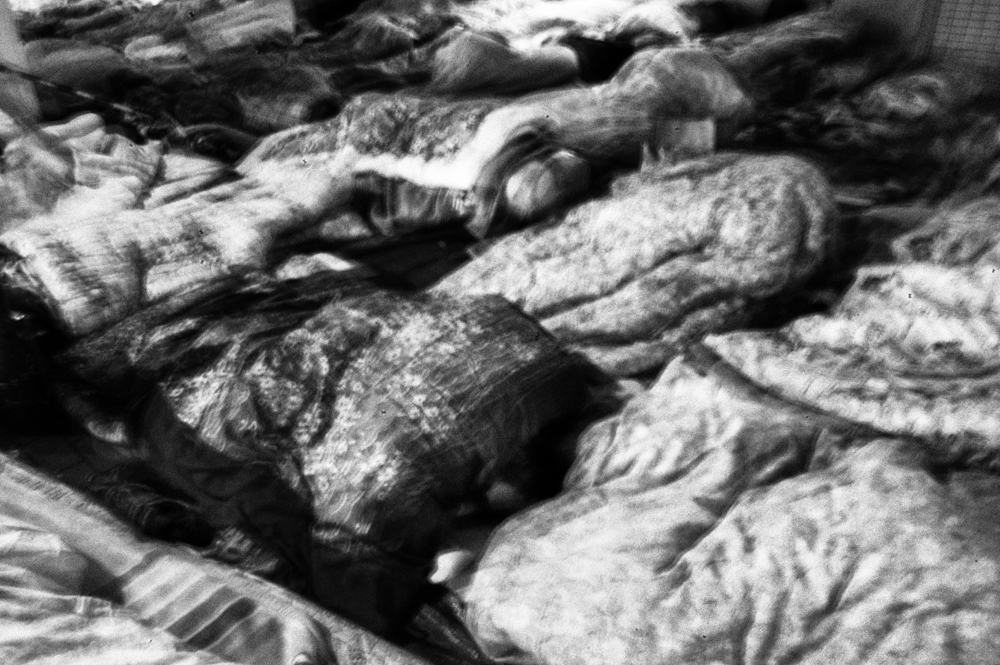
Most of the lights are turned off, the atmosphere changes and gets spooky. People prepare for the night, someone does laundry at the public toilet. Then they retire to their shelters, quickly set up the carton boxes as a rudimentary shed and try to sleep.
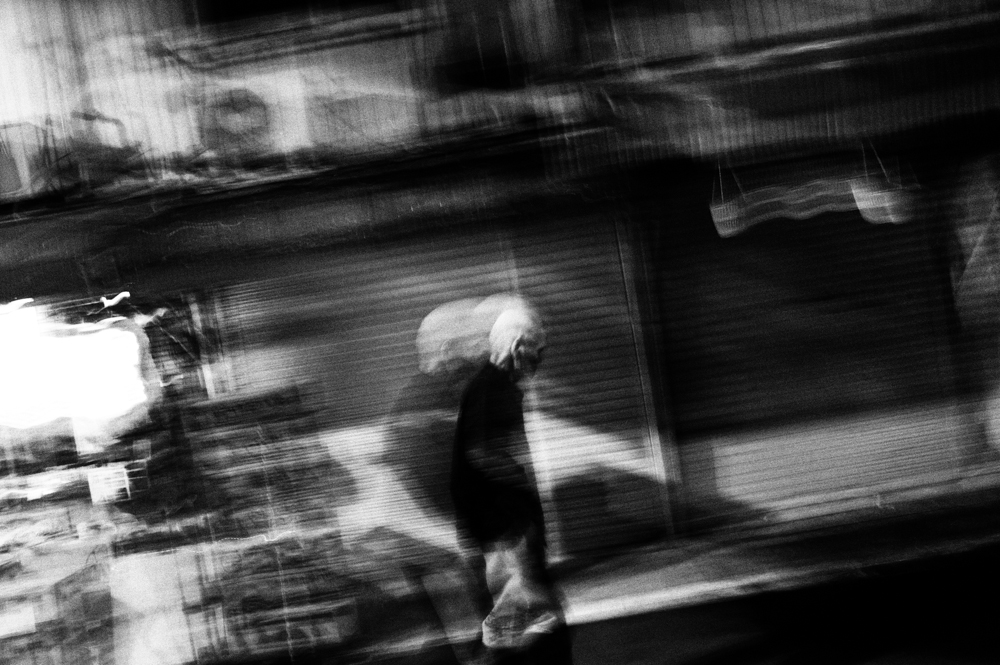
The few walking around increase the spookiness of the place, as they appear as ghosts.
Even the old one-car train, rattling as it runs through the darkness, doesn’t seem to belong to the outside Japan.